Guide for parents
A first 100 words list for kids, grouped by place
Here are 100 first English words for children aged four and up, sorted by the places a child would see them: the zoo, the pet shop, the farm, the hospital, the supermarket, the park, the school, a restaurant, and the kitchen, living room and bathroom at home. All of them are everyday things a child can point to. The full table is below, followed by ideas for teaching one place a week.
One note before you start. This is a vocabulary list for children who are learning English or starting to read. It is not a milestone checklist, and it does not tell you how many words a child of a certain age should know. If you have questions about your child's speech or language development, talk to your doctor or a speech-language pathologist.
Where this first words list comes from
The words come from the scenes in Wordventure, a picture vocabulary app set in a small town. Each place in the town has three levels: beginner, intermediate and advanced. The levels were graded against the Cambridge English Young Learners word lists, which run from Pre A1 Starters through A1 Movers to A2 Flyers, with harder everyday words at the top.
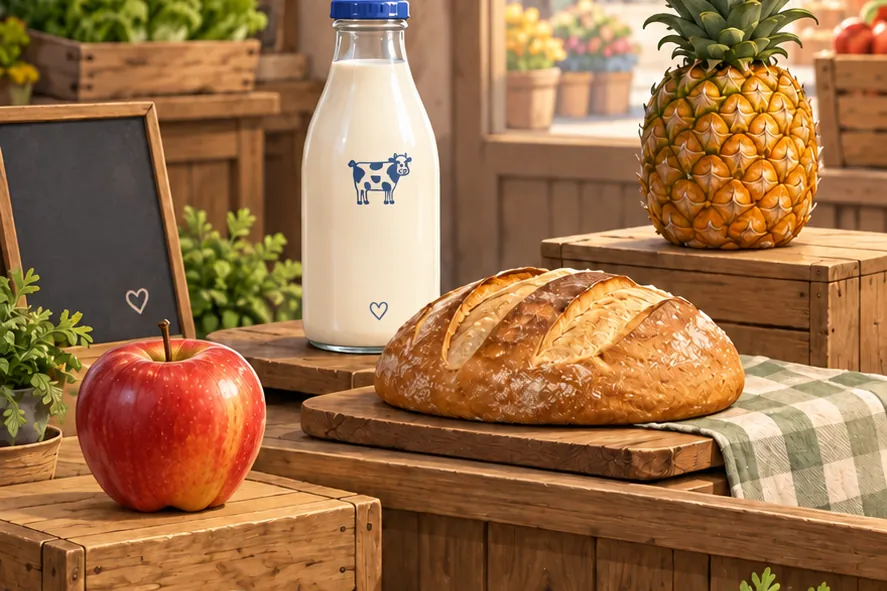
This list takes every beginner word from the eleven scenes (68 words) and adds 32 of the easier intermediate words to make 100. Grouping by place is a deliberate choice. A child who learns bread, milk and apple together, in a shop, has a scene to hang them on, and that makes the words easier to find again. The Cambridge Starters picture book is built the same way, with large scenes such as At the zoo, At home and At school.
The first 100 words, by place
Words are spelled the way the app spells them. The app accepts common variants when a child types or says an answer, such as yoghurt and yogurt, or lift and elevator.
| Place | First words (beginner level) | Next words | Count |
|---|---|---|---|
| Zoo | elephant, giraffe, lion, zebra, tiger, bear, monkey | panda, penguin, kangaroo | 10 |
| Pet shop | cat, dog, rabbit, ball, comb, towel | collar, food bowl, bird cage | 9 |
| Farm | cow, pig, chicken, egg, fence, boot | bucket, tractor, barn | 9 |
| Hospital | doctor, nurse, pillow, chair, soap, tissue | ambulance, bandage, medicine | 9 |
| Supermarket | apple, bag, carrot, bread, milk, pineapple | basket, cheese, shopping cart | 9 |
| Park | tree, flower, kite, bike, swing, slide | pond, bridge, bench | 9 |
| School | book, pencil, desk, backpack, clock, ruler | scissors, globe, lunchbox | 9 |
| Restaurant | plate, cup, spoon, fork, pizza, cake, chef | napkin, chopsticks | 9 |
| Kitchen | fridge, table, bowl, glass, knife, bottle | sink, kettle, cupboard | 9 |
| Living room | sofa, TV, lamp, window, door, picture | armchair, cushion, rug | 9 |
| Bathroom | bath, toilet, mirror, toothbrush, shower, slippers | toothpaste, tap, shampoo | 9 |
The beginner columns are a good first goal on their own. Move to the next words once your child can name most of a place's beginner words from a picture without help.
How to teach a first words list: one place a week
A list of 100 words is too much to learn at once, and reading down a table is not how children learn words. Take one place a week instead.
- Monday: look at a picture of the place together, in a book, an app or real life. Name the beginner words and let your child point to each.
- Tuesday to Thursday: play a short game with the same words each day. I Spy, Kim's game and memory cards all work; the picture vocabulary activities guide explains them.
- Friday: ask your child to name each thing as you point. Words they cannot name yet go on a review list.
- Next week: start a new place, and keep reviewing last week's missed words at growing gaps. The spaced repetition guide has a simple schedule.
Real visits help more than any list. A trip to the supermarket on the week you learn supermarket words lets your child find the carrot and the pineapple for real.
Questions to ask about each place
Once your child can name the things in a place, ask simple questions that make them use the words in a sentence. A child who can answer "What do we buy at the supermarket?" with "Bread and milk" is putting the words to work.
- Zoo: Which animal is the biggest? Which one has stripes?
- Supermarket: What do we put in the bag? What is your favorite fruit?
- Park: What can you ride? What do you play on?
- School: What do you write with? What do you carry your books in?
- Bathroom: What do you use to brush your teeth? What do you wear on your feet?
Answers of one or two words are fine for beginners. Repeat the answer back in a full sentence ("Yes, we put the bread in the bag") so your child hears the word in use.
Words that need a little extra help
Most words on the list are easy to picture. A few cause trouble for children learning English, and it helps to know which ones.
Two-word names
Shopping cart, food bowl and bird cage are one thing with two words. Teach them as a single name, and point to the whole object while you say both words together.
Words with more than one meaning
Glass can be something you drink from or the material in a window. Slide is in the park, but it is also an action. Tap is the word the app uses for the thing water comes out of; in the US it is usually called a faucet. Keep to the picture meaning first.
Spelling that does not match the sound
Knife has a silent k, and comb a silent b. If your child is spelling as well as speaking, leave these until the regular words feel easy.
Explore the same places in Wordventure
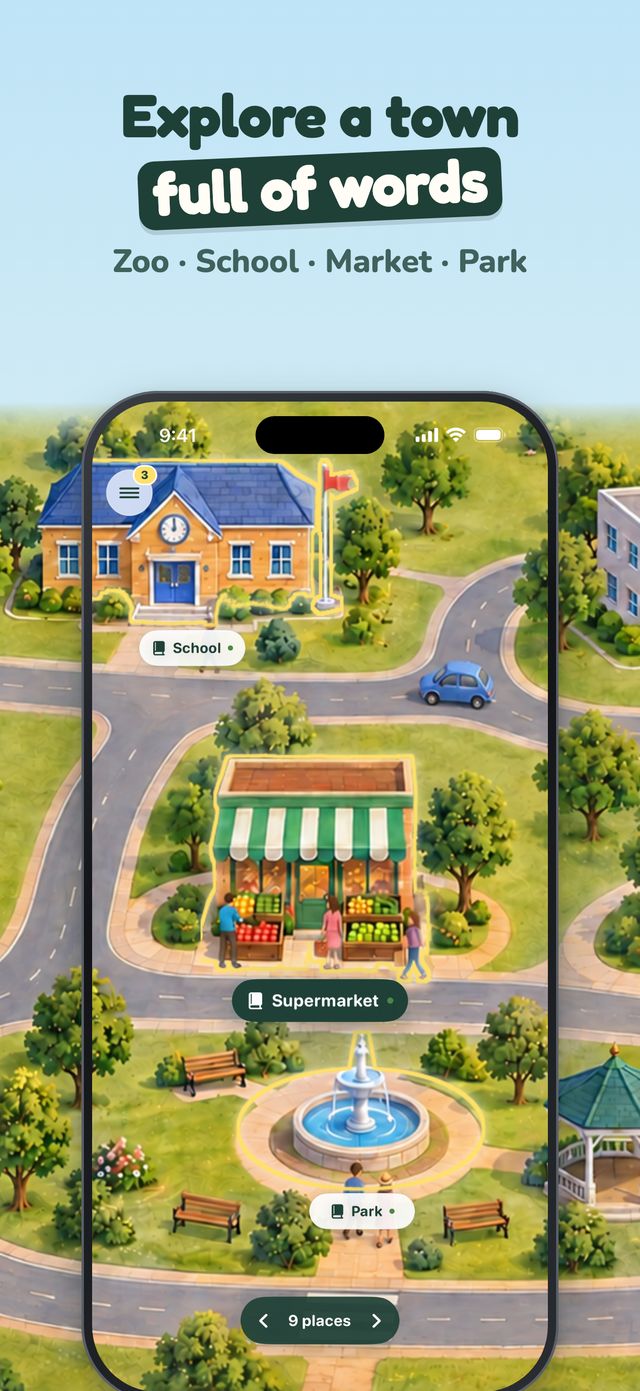
Every word in the table lives in a scene in Wordventure. The town map has nine places, and the home opens into a kitchen, a living room and a bathroom. Your child taps a thing in the picture and hears its name, sees how to say it, and can read its meaning in English, Chinese, French, German or Spanish. When a place feels easy, the intermediate and advanced levels each bring a new picture and new words, with more than 200 everyday words across 33 levels in all.
The first level of every place is free, so your child can try all the beginner words in this list before you decide whether to subscribe.
Questions parents ask
Is this first 100 words list a speech milestone checklist?
No. It is a vocabulary list for children aged four and up who are learning English or starting to read. It does not describe what a child should know at a given age. For questions about speech or language development, talk to your doctor or a speech-language pathologist.
Why group first words by place instead of alphabetically?
Words learned together in one scene, such as bread, milk and apple in a shop, give a child a picture to connect them to. That makes the words easier to remember and to use in real life.