Guide for parents
How to teach your child English as a second language at home
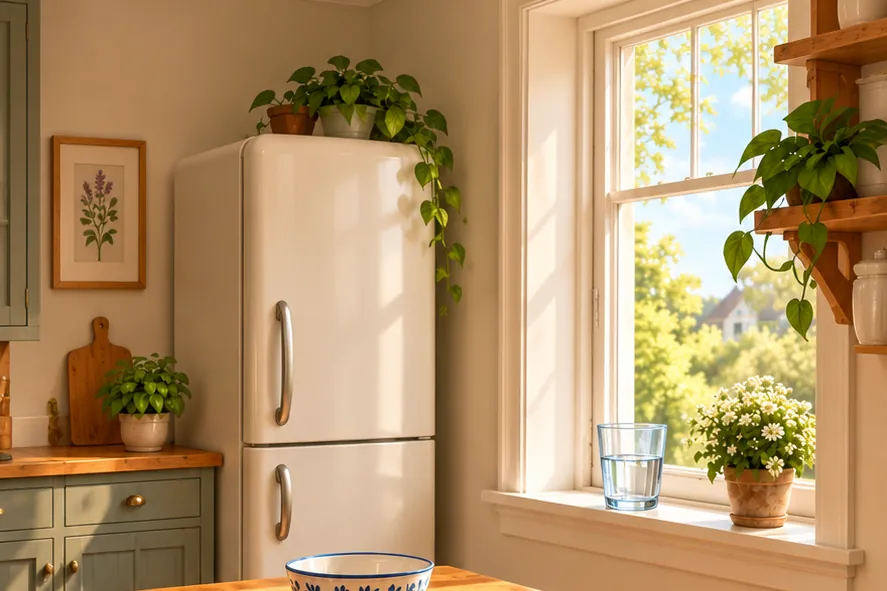
Start in the kitchen. To teach a child English as a second language at home, set a short daily time, about fifteen minutes, and use it to name the things around you in English: the fridge, the table, a bowl, a glass. Repeat the same words over many days, play simple games with them, and let your child use your home language whenever they need to. You do not need perfect English to do this.
This guide gives a room-by-room word list, a daily routine you can copy, and advice on how to use your own language alongside English.
You can teach English at home even if your English is not perfect
Many parents worry that their accent or grammar will hold their child back. The British Council's LearnEnglish Kids team says plainly that it does not matter if your own English is not perfect, and that your enthusiasm and encouragement matter most. Children pick up your attitude to the language as much as the words.
What you can do well, whatever your level, is give your child many chances to hear and use the same words. A word your child hears in the kitchen every evening for two weeks will stay with them better than a long list practiced once. For correct pronunciation of each word, use a recording or an app as the model and practice together.
Start with words from your own house
Household words are the best first English vocabulary for most children. They are concrete, your child sees them every day, and you can use them during routines you already have: cooking, tidying, getting ready for bed. Cambridge English uses the same idea in its first word list for young learners, which includes an At home scene.
The table below lists the beginner words from the three rooms in Wordventure's home. They make a good first month.
| Room | Words to start with | When to use them |
|---|---|---|
| Kitchen | fridge, table, bowl, glass, knife, bottle | Setting the table, snacks, putting shopping away |
| Living room | sofa, TV, lamp, window, door, picture | Tidying up, turning lights on and off, play time |
| Bathroom | bath, toilet, mirror, toothbrush, shower, slippers | Bath time, brushing teeth, getting ready for bed |
Once these are easy, move outside the house. The first words list grouped by place adds the zoo, the supermarket, the park and more.
A 15-minute English routine for every day
The British Council recommends short, frequent sessions over long, rare ones, and suggests fifteen minutes is enough for very young children. A routine keeps those minutes from slipping away. Here is one that works for children aged four to eight:
- Minutes 1 to 3: warm up. Sing one short English song with actions. Use the same song for a week.
- Minutes 4 to 8: name things. Pick one room and five words from the table. Point, say the word, and ask your child to touch the thing. Then point and let your child say the word.
- Minutes 9 to 12: play. Play a quick game with the same words: I Spy, Simon Says ("Simon says touch the fridge"), or a hiding game. The picture vocabulary activities guide has more.
- Minutes 13 to 15: review. Go back over yesterday's words. Any your child has forgotten go on tomorrow's list.
Use the words outside the routine too. "Can you get the bowl?" at dinner is worth as much as a game, because it shows your child the word is real.
Simple English phrases to use with household words
Single words are the start. A handful of short phrases lets your child use those words every day, and you can say them even with basic English:
| Phrase | Example |
|---|---|
| Where is the ...? | Where is the lamp? |
| Can you get the ...? | Can you get the bowl? |
| Open / close the ... | Close the door, please. |
| Put it on the ... | Put it on the table. |
| What is this? | It is a mirror. |
Use one or two phrases a week, always with the same words, until your child starts answering without thinking.
Using your home language while your child learns English
Some parents try to speak only English. That is not necessary, and for many families it is not possible. Your home language is the fastest way to tell a child what a new word means, especially for words that are hard to show. A quick translation, then the English word in use, is a good pattern.
Children learning two languages often mix them, using an English word in a sentence in their home language or the other way round. The Communication Health Support Association, whose public advice draws on the American Speech-Language-Hearing Association (ASHA), describes this mixing as an expected part of learning more than one language. If you are concerned about your child's speech or language development, they advise talking to a speech-language pathologist.
Do not worry if your child understands English for weeks before they say much. Many children have a quiet period where they listen and take words in. The British Council advises patience: with time, children begin to speak English on their own.
Practice the same rooms in Wordventure
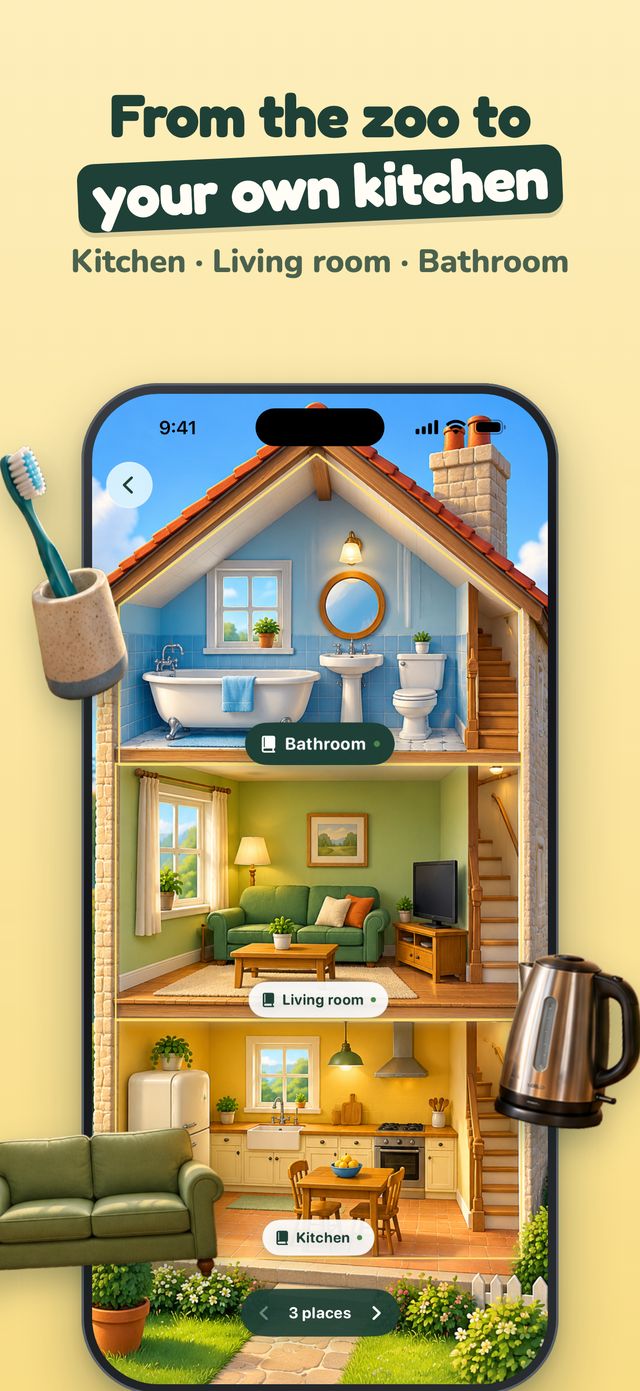
Wordventure includes the same three rooms. On the town map, the home opens as a cut-away house with a kitchen, a living room and a bathroom. Your child taps the fridge or the toothbrush and hears the English word, sees how to say it, and reads its meaning in their own language. The app shows meanings in English, Chinese, French, German or Spanish, which you can set to match your family.
Because the app speaks every word aloud, it gives your child a clear model to copy while you take care of the games and the daily use. When your child is ready, Say it asks them to answer out loud, and Spell it asks them to type the word they hear. Words they miss can be saved as flashcards that come back on a schedule. The languages section on the homepage lists what each mode supports.
How to keep it going for months
The first two weeks are easy because everything is new. Most home English plans stop in the second month. These habits help:
- Attach English time to something that already happens every day, such as after dinner or before bath.
- Change the room every one or two weeks so there is always something new, but keep reviewing the old words.
- Keep a wall chart of words your child knows. Seeing it grow is motivating for both of you.
- Add one new kind of practice each month: songs first, then games, then simple spelling.
Questions parents ask
Should I speak only English at home to help my child learn?
No. Use English during a set time and in everyday routines, and keep your home language for everything else. Your home language helps your child understand new English words faster, and mixing the two languages is an expected part of learning both.
What English words should I teach my child first at home?
Start with things your child can see and touch every day, such as fridge, table, bowl, sofa, lamp, door and toothbrush. Use them during routines like meals and bath time before moving on to words from outside the house.